PhD in Islamic Studies
Ph.D. in Islamic Studies
The Ph.D. in
Islamic Studies program is designed to produce scholars capable of conducting extensive and original research on the formation of Islamic discourses
and dynamics of Muslim societies either in the classical
or contemporary era through interdisciplinary, multi-interdisciplinary, and
transdisciplinary perspectives. Graduates of the Ph.D. in Islamic Studies program
are expected to have excellent substantive and theoretical knowledge of Islamic
Studies and social sciences and demonstrate an excellent command of research
skills required to produce independent and original research in the subject
areas of their scholarly interests.
Expected Learning Outcomes/Competency of Ph.D. in Islamic Studies
Upon completion of the degree, students are expected to:
- Have excellent knowledge of approaches and theories in Islamic Studies as well as key issues in the studies of Islam and Muslim societies
- Have an excellent, substantive, and theoretical understanding of the dynamics of Muslim social movements, their theological debates, and their transformations from the classical to the contemporary era
- Have an advanced understanding of various research methods in Islamic studies and social sciences and demonstrate an excellent command of specific research skills in the discipline, together with a proven ability to produce original and independent research
- Have an excellent theoretical understanding of Muslim societies, together with the proven ability to critically assess various theories and approaches deriving from Islamic studies, social sciences, and humanities
- Apply their skills to conduct independent and original research about the construction of Islamic discourses and the dynamics of Muslim societies.
Ph.D. Degree Requirement
A student seeking a Ph.D. degree in Islamic Studies at UIII must complete at least 48 credit hours beyond the MA degree that he/she has obtained. The credits comprise foundation, core, and elective courses, methodology clinics, journal article publications, and PhD dissertations.
Course Structure
The Requirement will be satisfied with the following components:
- 5 Credits Islam in Religious Moderation Framework
- 5 Credits Methodology Clinics
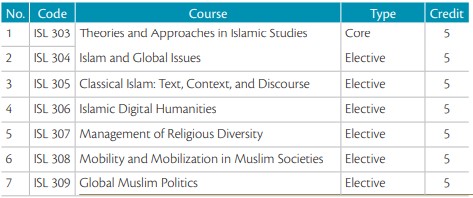
- 5 Credits Theories and Approaches in Islamic Studies
- 5 Credits Elective Course
- 3 Credits Article Publication in Reputable Journal
- 3 Credits Dissertation - Work in Progress 1
- 3 Credits Dissertation - Work in Progress 2
- 7 Credits Closed Dissertation Examination
- 12 Credits Open Dissertation Examination
Semester 1 (15 Credits)

Semester 2 (10 Credits)
Semester 3 (3 Credits)

Semester 4 (3 Credits)

Semester 5 (3 Credits)

Semester 6 (19 Credits)
